The Flak Jacket Underbody System
What goes where on a vehicle, at what thickness, and the prep that decides whether it lasts.
Request the Underbody Data SheetWhy Flak Jacket Leads on Vehicles
On structural steel, OR93BL is the default because the enemy is only weather. Underneath a vehicle the enemy is weather plus mechanical abuse, and that changes the product selection.
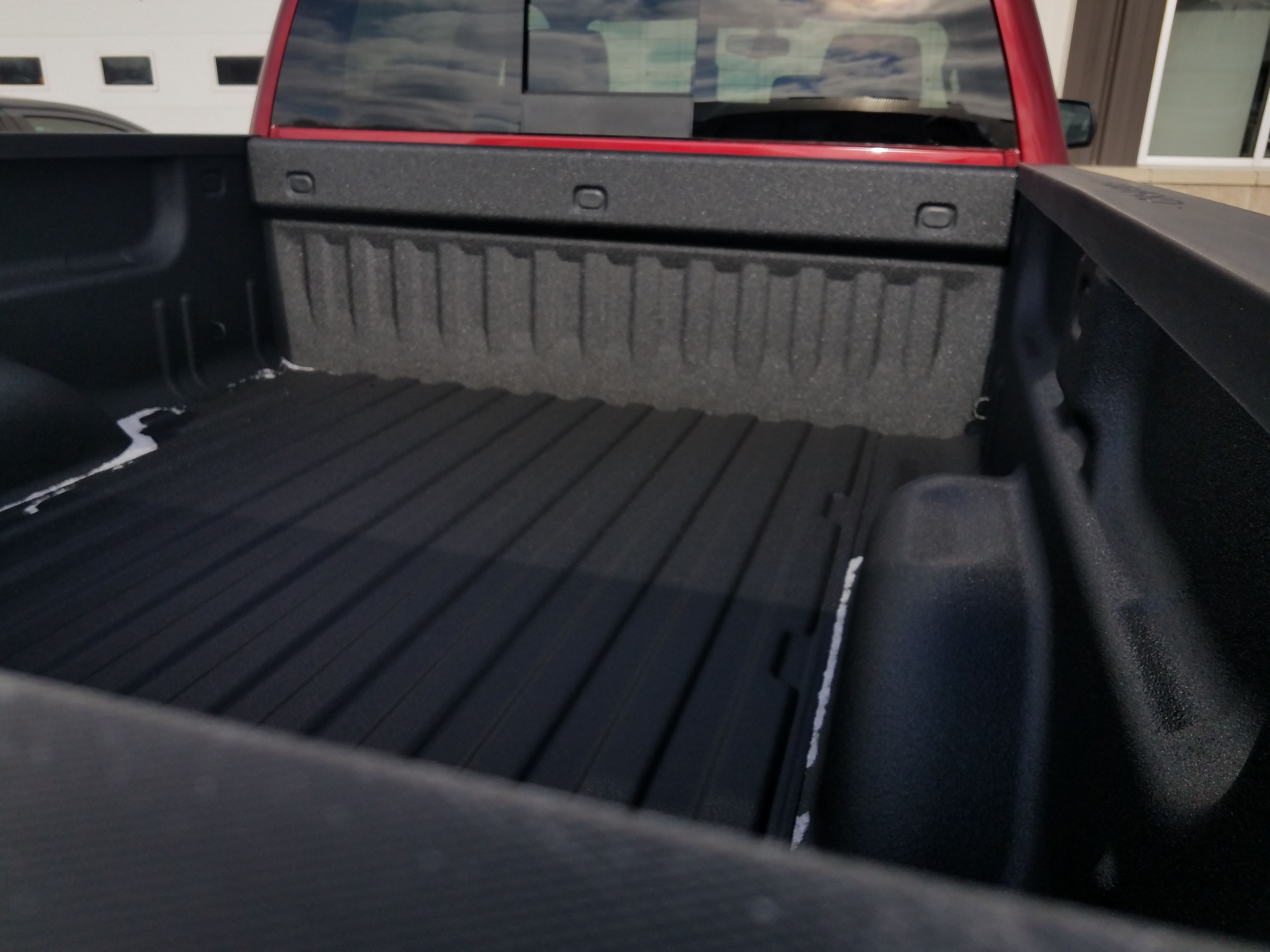
Flak Jacket 1 (FJ1) is the higher-build grade in the polyurea line, formulated for impact alongside corrosion. Underneath a truck it is doing three jobs at once: keeping brine off the steel, absorbing stone chip thrown off the tires at highway speed, and surviving whatever gets dragged across the bed floor. Its tear strength — 400 to 500 pli — is what keeps a stone strike from starting a tear that propagates.
Flak Jacket Pro is the wear grade, and on vehicles it is specified where material moves across the surface rather than merely hitting it: dump bodies hauling aggregate, the tailgate and chute area on spreader trucks, and the leading edges on plow rigs.
OR93BL still has a place — frame rails, crossmembers, and inner structure that gravel never reaches. It costs less per square foot and it is the right call where the requirement is purely a corrosion barrier. A well-specified vehicle typically uses two grades, not one.
All of them are 100% solids, which underneath a vehicle means something specific: no solvent evaporating out of the film, so no shrinkage stress pulling at the bond on a surface that is about to start flexing and vibrating for the next decade.
DFT by Vehicle Area
| Property | Value |
|---|---|
| Bed floor & walls | FJ1 60 – 80 mil |
| Tailgate, inside face | FJ1 60 mil |
| Bed rails & stake pockets | FJ1 60 mil |
| Frame rails & crossmembers | OR93BL 30 – 40 mil |
| Rocker panels & cab corners | FJ1 60 mil |
| Wheel wells & inner fenders | FJ1 60 – 80 mil |
| Spring hangers & shackle mounts | OR93BL 40 mil |
| Floor pans & trunk floors | OR93BL 30 – 40 mil |
| Trailer deck (steel or wood) | FJ1 60 – 80 mil over 7001 |
| Dump body interior | Flak Jacket Pro 80 – 120 mil |
| Plow & spreader contact faces | Flak Jacket Pro 80 – 120 mil |
| Tensile strength | 2,500 – 3,000 PSI |
| Elongation | 300 – 400% |
| Tear strength | 400 – 500 pli |
| Service temperature | -40°F to 250°F |
| Tack-free | 10 – 30 seconds |
| Back on the road | Typically under 1 hour |
| Coverage | 1,604 mil-sq-ft per gallon |
Prep: Chlorides First, Everything Else Second
Underbody work has one prep step that dominates all the others, and it is the one most often skipped.
Wash the salt off, then verify it. Any vehicle that has run salted roads carries chloride in every seam and pocket. Pressure wash thoroughly — including the frame rail interior through the drain holes if you can reach it — let it dry, and test for soluble chlorides below 7 µg/cm². Coating over salt causes osmotic blistering: moisture is drawn through the film toward the salt, the coating lifts, and corrosion continues underneath where nobody can see it. Retest if the first result fails.
Degrease before abrading. Underbodies collect oil, road film, and undercoating residue. Clean it off first — grinding first drives contamination into the surface. Super Orange Cleaner handles most of it. Old rubberized undercoating generally has to come off entirely; it is not a substrate anything bonds to.
Power-tool the loose material. SSPC-SP3 with wire wheels, flap discs, and needle scalers. Tight, firm rust can stay and gets sealed. Anything a putty knife lifts must come off.
Check for perforation before you quote. Tap the frame rail and rockers with a small hammer. A dull thud, a dent, or a hole means metal repair comes first. Coating over a perforated rail hides a structural problem rather than solving it.
Mask thoroughly. Brake components, exhaust, driveshaft, sensors, wiring, vent tubes, and anything that moves or gets hot. Overspray travels and it dries to dust in seconds. Masking is most of the labour on a vehicle job.
Cavities, Seams & the Places You Cannot See
Frame rails, rocker panels, and box sections rot from the inside out. Brine enters through drain holes, wiring pass-throughs, and seams, then sits in an unventilated cavity where it stays wet indefinitely.
An extension wand puts atomized material into those cavities and coats the interior wall. It is worth doing, with one honest caveat: coverage inside a blind cavity cannot be verified visually, so we treat it as a sacrificial interior film rather than a warranted thickness. The exterior still gets coated to full spec.
Some restorers and fleets prefer a creeping oil or lanolin product for cavities specifically, precisely because it flows and self-heals rather than needing complete coverage. That is a defensible choice, and combining the two — sprayed polyurea on every exterior surface, annual creeping oil in the closed cavities — is arguably the strongest underbody program available. We will not pretend otherwise to sell more polyurea.
Do not block the drain holes. Whatever goes in a cavity, water needs a way out. Keep drains clear during application and check them afterwards.
Want the Vehicle Application Guide?
TDS and SDS for FJ1 and Flak Jacket Pro, plus a masking and prep checklist written for vehicle work.
Request DocumentationGet Underbody Pricing
Tell us about your project and we will follow up with product details, technical data sheets, and pricing.